The debate over unmasking the whistleblower
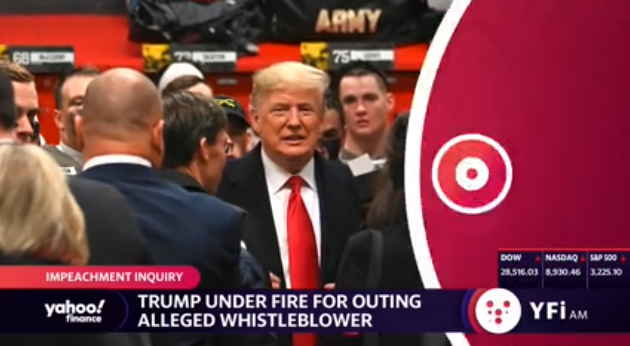 |
| Source: us.yahoo.com |
The anonymous whistleblower’s complaint, filed in August, first brought to light allegations that the president was using the military aid as a negotiating ploy to compel Ukraine to say it was investigating the business of Joe Biden’s son, hurting the leading Democratic candidate’s chances in the 2020 race. That complaint led to the launch of an impeachment inquiry, which ultimately led to Trump’s impeachment in the House of Representatives.
The purported identity of the whistleblower, which Yahoo New is not publishing, has been shared around far-right media for weeks and was recently published by some mainstream conservative publications. Trump has repeatedly called for the whistleblower to be identified, as have Republican members of Congress. At least two GOP representatives have publically used the name of the person believed to be the whistleblower.
As the Associated Press noted U.S. whistleblower laws “exist to protect the identity and careers of people who bring forward accusations of wrongdoing by government officials.” But there’s ambiguity about whether an official like Trump outing the person would violate those laws.
Why there’s debate
Calls for the whistleblower to be identified have mostly come from the president’s supporters. Trump and his allies have argued that the whistleblower’s identity must be made public to answer questions about their motivation for filing the complaint against Trump. Some journalists have argued that the press should out the whistleblower because the public deserves to have as much relevant information as possible to judge the merits of the impeachment process.
Others say the whistleblower must remain anonymous. Outing the person could endanger them and would make other whistleblowers less likely to call out corruption in the future, some argue. Trump’s critics further say he is looking to create a media circus to distract from the substance of the accusations against him.
Some make the case that the whistleblower’s identity is irrelevant, since the allegations in the complaint have been corroborated and expanded upon by witness testimony in the impeachment inquiry and an edited transcript of Trump’s phone call with Ukraine’s president in July.
What’s next
The whistleblower’s legal team has reportedly begun preparing for the possibility that their client may be compelled to testify in the Senate impeachment trial, though Democrat and GOP lawmakers are currently jockeying over whether the proceedings will feature any witnesses at all. The Senate trail could start as soon as this month if an agreement on rules is reached.
Perspectives
Do not disclose
Trump is eager to sic the conservative propaganda machine on the whistleblower
“Once the person’s identity is revealed, then they can find something to discredit them with and crank up the character assassination machine, which will then allow them to say that the whole thing was fruit of a poisonous tree and Trump must be found innocent.” — Paul Waldman, Washington Post
Identifying them would distract from the substance of Trump’s actions
“Disclosure can shift the story to the whistleblower’s irrelevant credibility, with the added bonus of deterring future whistleblowing. Of course, that is exactly why those whose bad acts are exposed by whistleblowers try to force the disclosure.” — Eric Havian and Michael Ronickher, USA Today
The whistleblower’s identity doesn’t matter
“The case against the president will rise or fall on the strength of the testimony being gathered from people with direct knowledge of what Trump said and did, regardless of the motives of the whistleblower who started the ball rolling.” — Editorial, Los Angeles Times
The whistleblower's life could be put at risk if identified
“While the presumed whistle-blower reportedly remains employed by the government, he is also reportedly subject to regular death threats, including at least implicit threat by Trump himself.” — David Frum, Atlantic
The fight against corruption requires protection for whistleblowers
“There are laws that protect whistleblowers. They are allowed to retain their anonymity and they are allowed to be free from retaliation. That is kind of a principle of solid government, good government, which is if somebody sees wrongdoing taking place within the government, there should be a mechanism there to report this without having to fear retribution.” — Rick Newman, Yahoo Finance
Identify them
Democrats’ motivations for protecting the whistleblower are purely political
“If the whistleblower testifies under oath, inconvenient truths will erupt. So, Democrats reckon, they are better off sticking a sock in his mouth.” — Deroy Murdock, Fox News
The press should name the whistleblower
“By leaving the whistleblower’s mask intact, establishment outlets believe they’ve navigated their way to the right side of the ethical line. But the whistleblower’s identity has become a political issue, and all this press coyness...puts the country’s top publications at risk of losing the trust of their readers. This approach enforces the prejudice that the establishment press is run by a bunch of high-handed, hypocritical elites.” — Jack Shafer, Politico
The public deserves to know who the whistleblower is
“The public has a right to know. There is no higher public concern than a debate that could lead to the president's removal. Simply put, everything should be public, because the public should be aware of everything that figures into the process.” — Editorial, Washington Examiner
Too many questions need answered for the whistleblower to stay anonymous
“What, if anything, did he leak? Did he work with Biden on Ukraine...Did he know about Burisma and Hunter Biden? Who told him about the call, and why did that person not complain instead of him? How did Schiff’s staff help him tailor the complaint? ...Shouldn’t we know the answers to these questions now, and not in two or three years when the inevitable official reports and tell-all books come out?” — Editorial, New York Post
